# Phone Charger Import in Bangladesh: GaN, USB PD and Safety Checks for Wholesale Buyers
Short answer: For a phone charger import into Bangladesh, buy to a protocol and wattage, not a brand label. Specify USB Power Delivery (with PPS for recent Samsung phones), choose GaN for 45W and above, demand e-marked 5A cables for anything over 60W, and reject any supplier who cannot show CE and RoHS documents and a fused, properly insulated build.
Phone charger import in Bangladesh looks like the simplest category in electronics wholesale. That simplicity is why it goes wrong. Chargers are mains-connected power supplies, cables carry real current, and power banks are lithium batteries that count as dangerous goods in transport.
This guide is for Bangladesh retailers, distributors and repair shops ordering from Shenzhen: protocols, GaN, counterfeit risks and the documents to collect before goods reach Chattogram.
What Is a GaN Charger, and Is It Worth Importing?
A GaN charger is a power adapter that uses gallium nitride transistors instead of conventional silicon transistors in its switching stage. GaN switches faster and wastes less energy as heat, so more watts fit in a smaller housing.
For a wholesale buyer:
- Size per watt. A 65W GaN charger can be close to the size of an older 20–30W silicon charger.
- Multi-port designs. GaN makes 2- and 3-port chargers (USB-C plus USB-A) practical at 45–65W, which suits customers charging a phone and a laptop from one plug.
- Higher unit cost. GaN parts cost more than silicon. At 18–25W the benefit is small; at 45W and above it is usually worth paying for.
A well-built 20W silicon charger is still a good product for a phone-only customer. Match the technology to the wattage tier.
| Feature | Silicon charger | GaN charger |
|---|
| Typical wholesale sweet spot | 18W–25W single-port | 30W–65W, often multi-port |
| Size at the same wattage | Larger | Noticeably smaller |
| Heat at full load | Higher | Lower for equivalent design |
| Unit cost | Lower | Higher |
| Best customer fit | Budget phone buyers | Laptop, tablet and flagship phone users |
USB PD, PPS and Quick Charge Explained
Wattage on the label means nothing unless the charger and the phone agree on a protocol.
USB Power Delivery (USB PD) is the USB-IF standard for fast charging over USB-C. The charger advertises the voltages and currents it can supply, and the device requests one. According to the USB-IF USB Charger (USB Power Delivery) page, earlier USB PD topped out at 100W using 20V and USB Type-C cables rated at 5A, and Revision 3.1 extends this to up to 240W with new 28V, 36V and 48V levels. iPhones, iPads, Pixels, MacBooks and most current laptops charge over USB PD.
PPS (Programmable Power Supply) is part of USB PD 3.0 and later. Instead of fixed steps such as 5V, 9V and 15V, the phone can request finely adjusted voltage. Samsung's "Super Fast Charging" relies on PPS, so a USB PD charger without PPS will charge a recent Galaxy phone, but not at its advertised fast rate. If your customer base is Samsung-heavy, PPS support should be written into the purchase specification.
Qualcomm Quick Charge (QC) is a proprietary fast-charging system used by many Android phones built on Snapdragon chips. Older versions such as QC 3.0 commonly run over USB-A ports; confirm which QC version a model supports rather than assume.
A useful buying rule: a USB-C port should support USB PD (and ideally PPS); a USB-A port on the same charger can carry QC for older Android phones. "PD 3.0 / PPS / QC 3.0" with per-port wattage is a testable claim; "Super Fast 65W" is not.
Do You Need E-Marked USB-C Cables for 65W and Above?
Yes, once a cable must carry more than 3A. USB-C cables without an electronic marker chip are limited to 3A, which at 20V is 60W. To carry 5A, and therefore reach 100W or more, the cable must contain an e-marker chip that tells the charger it can handle the current. Pair a 100W charger with an unmarked cable and it falls back to 60W.
Treat cables as a separate specification line:
- Current rating: 3A (up to 60W) or 5A e-marked (up to 100W; 240W for USB PD 3.1 cables).
- Conductor gauge: ask for the wire gauge of power conductors. Thin copper or copper-clad aluminium heats up under fast charging.
- Connector build: check overmould strain relief and the metal shell. Braided jackets help with abrasion but do not fix poor conductors.
Cables also sit outside the charger's tariff heading, so confirm their classification with your customs team before you build the landed-cost sheet. Our guide to phone parts HS codes and import duty in Bangladesh covers how classification affects your duty line.
Why Counterfeit Chargers Are Dangerous
A counterfeit charger is a power adapter that copies the look, branding or safety markings of a genuine product without being built or tested to the standard those markings claim. The risk is that the barrier between 220V mains and the USB connector a customer touches is missing or inadequate.
The UK charity Electrical Safety First reports that 98% of the fake iPhone chargers it tested had the potential to cause a lethal electric shock or start a fire, and notes that in some cases fuses were overlooked entirely (Electrical Safety First). The faults that cause this are consistent and inspectable:
- Inadequate creepage and clearance. Creepage is the distance along a surface between the high-voltage primary side and the low-voltage secondary side; clearance is the distance through air. Safety standards for IT and audio-video equipment, such as IEC 62368-1, set minimum separations. Counterfeits shrink the board and put the two sides millimetres apart, sometimes with no isolation slot.
- Missing input fuse. A genuine design has a fuse or fusible resistor on the mains input. Counterfeits often skip it, so an internal short has nothing to stop it.
- Weak or single insulation in the transformer. The transformer is the main safety barrier. Cheap units use thin tape and too few layers.
- Fake ratings. A label claiming 65W on a board that cannot sustain 30W leads to overheating, swollen housings and melted plugs.
- Fraudulent marks. CE, RoHS and brand logos are easy to print. A mark on the housing is not evidence of testing.
When you approve a new charger model, ask the supplier for a teardown photo set or buy a sample and open it. Look for a visible fuse, a slot or barrier between primary and secondary, a Y-capacitor rated for safety use, and a solid transformer.
CE, RoHS and Bangladesh Import Documentation
For a wholesale charger shipment from Shenzhen, the documents that matter are:
- CE Declaration of Conformity and test report identifying the exact model number, the standards tested against (typically IEC/EN 62368-1 for safety and EMC standards), and the testing laboratory.
- RoHS test report confirming restricted substances such as lead and cadmium are below threshold levels.
- Commercial invoice and packing list that state wattage, port configuration and model numbers, matching the product labels.
- Certificate of origin for China-origin goods.
Check that the model number on the test report matches the housing; suppliers sometimes reuse another model's report.
On local compliance, Bangladesh Standards and Testing Institution (BSTI) maintains a list of products under mandatory certification that changes over time. Before a large order, confirm with your clearing agent whether the product type falls under a current BSTI requirement, and whether any wireless feature brings it into BTRC type-approval scope. KHI handles NBR customs clearance in-house; see our customs clearance service for how we prepare the file before the goods arrive.
Power Bank Import: Lithium Batteries Are Dangerous Goods
A power bank is a lithium-ion battery pack with a charging circuit, and in transport it is treated as a battery rather than as ordinary electronics.
The IATA lithium batteries guidance explains that whether a rechargeable lithium battery can be carried by air depends on its configuration and its watt-hour (Wh) rating. For a buyer, this means:
- Know the Wh rating. Wh = mAh × nominal voltage ÷ 1000. A 10,000 mAh pack at 3.7V is 37Wh; a 20,000 mAh pack at 3.7V is 74Wh. The rating must be printed on the pack.
- Get a UN38.3 test summary. UN38.3 is the UN transport test series for lithium cells and batteries, and carriers and forwarders expect it before they accept the cargo.
- Ask for an MSDS/SDS for the battery chemistry.
- Plan the route. Sea freight is usually the practical choice for wholesale power bank volume; air freight has stricter packing, labelling and quantity rules.
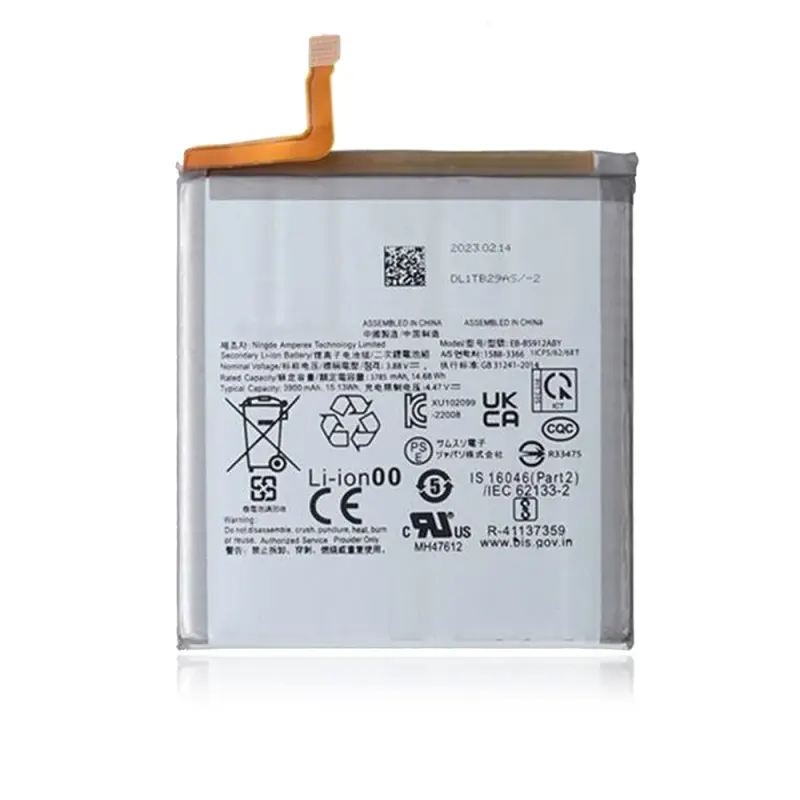
Inflated mAh labels are common, so weigh samples against the claimed capacity. We cover cell grades and UN38.3 documentation in more depth in our phone battery import guide.
Building a Charging Accessories Range for the Bangladesh Market
A sensible wholesale range:
| Tier | Product | Protocols to specify | Who buys it |
|---|
| Entry | 18W–20W single USB-C | USB PD 3.0 | iPhone and budget Android users |
| Mid | 25W–35W USB-C, optional USB-A | USB PD 3.0 + PPS, QC on USB-A | Samsung and Xiaomi owners |
| Upper | 45W–65W GaN, 2–3 ports | USB PD 3.0 + PPS | Laptop, iPad and multi-device users |
| Cables | USB-C to C 3A and 5A e-marked; USB-C to Lightning | Matched to charger tier | All tiers, sold as attach items |
| Power banks | 10,000 mAh and 20,000 mAh | USB PD output | Commuters, delivery riders |
Chargers are natural attach items for repair counters, including laptop repairs where a customer collecting a MacBook needs a USB-C PD charger. Our MacBook parts sourcing guide covers that side of the bench.
K.H. Infinity (KHI) is a Bangladesh B2B importer of charging accessories (HS Code 8504.40.00), supplying 18W–65W USB-C chargers with GaN options, cables and 10,000–20,000 mAh power banks sourced from Shenzhen, with CE and RoHS supplier documentation and in-house NBR customs clearance.
If you are importing for the first time, our import from China trade route explains how consolidated orders reach Chattogram.
Request Wholesale Pricing
Send us your target wattage tiers, port mix and monthly volume, and we will quote with the matching CE and RoHS documents and the power bank shipping paperwork. Browse the charging accessories range or request a quote directly.
Frequently Asked Questions
Is a GaN charger safer than a regular silicon charger?
Not automatically. GaN improves efficiency and size, but safety depends on the insulation, creepage distances, fuse and transformer design. A badly built GaN charger is as dangerous as a badly built silicon one, so inspect samples either way.
Why does my 65W charger only charge at 60W?
The most common reason is the cable. USB-C cables without an e-marker chip are limited to 3A, which caps power at 60W at 20V. Use a 5A e-marked cable to unlock higher wattage on chargers and devices that support it.
Do Samsung phones need a PPS charger for fast charging?
Samsung's Super Fast Charging uses USB PD with PPS. A standard USB PD charger without PPS will still charge the phone safely, but more slowly than the advertised fast rate. Specify PPS if you sell to Samsung-heavy customers.
What documents should a charger supplier provide for import into Bangladesh?
At minimum, a CE Declaration of Conformity with a test report for the exact model, a RoHS test report, a commercial invoice and packing list stating model numbers and wattage, and a certificate of origin. Confirm current BSTI requirements for the product type with your clearing agent before ordering.
Can power banks be shipped to Bangladesh by air?
They can, but power banks are lithium batteries and are regulated as dangerous goods, so air shipments face strict packing, labelling and documentation rules based on Wh rating. You will need a UN38.3 test summary and an SDS. For wholesale volumes, sea freight is usually simpler.