# Phone Battery Import in Bangladesh: UN38.3, Dangerous Goods Rules and Battery Grades Explained
Short answer: Import replacement phone batteries into Bangladesh as Class 9 dangerous goods (UN3480 when shipped alone), with a UN38.3 test summary and SDS for every model, a state of charge at or below 30% for air freight, and a DG-approved forwarder. On arrival, check swelling, date code, cycle count and capacity.
Phone battery import in Bangladesh is not the same as importing screens or back glass. A display is general cargo. A lithium-ion battery is a dangerous good, and the paperwork, packaging, labels and route all follow from that. Buyers who treat batteries like any other carton find out at the origin airport, where the shipment is refused, or at Chattogram, where it waits for missing documents.
Are phone batteries dangerous goods for import?
Yes. A replacement phone battery is a lithium-ion battery, and lithium-ion batteries are classified as Class 9 miscellaneous dangerous goods under the UN system used by air, sea and road transport rules. The classification does not depend on brand, grade or price.
For air freight, the rulebook is the ICAO Technical Instructions, which IATA publishes for airlines and shippers as the IATA Dangerous Goods Regulations (DGR). IATA issues a new edition every year, so confirm with your forwarder which edition is in force on your shipping date. The underlying standards come from the ICAO dangerous goods programme.
UN3480 vs UN3481: which number applies to your shipment?
The UN number tells the airline what is in the box:
| UN number | What it covers | IATA packing instruction | Typical phone-parts example |
|---|
| UN3480 | Lithium-ion batteries shipped by themselves | PI 965 | A carton of replacement iPhone or Samsung batteries |
| UN3481 | Lithium-ion batteries packed with equipment | PI 966 | A phone and a spare battery in the same box |
| UN3481 | Lithium-ion batteries contained in equipment | PI 967 | A complete phone with its battery installed |
Loose replacement batteries are UN3480 under Packing Instruction 965, the strictest of the three.
What IATA PI 965 Section IA and IB require
According to the IATA Lithium Battery Guidance Document, PI 965 is split by size:
- Section IA covers lithium-ion cells above 20 Wh and batteries above 100 Wh. It needs UN specification packaging, and the per-package limit on a cargo aircraft is 35 kg.
- Section IB covers smaller cells and batteries, which includes practically every phone battery. The per-package limit on a cargo aircraft is 10 kg, and the packaging must pass a 1.2 m drop test and a 3 m stack test.
- Under both sections, UN3480 batteries are forbidden as cargo on passenger aircraft. Every PI 965 package must carry the Cargo Aircraft Only label as well as the Class 9 lithium battery label and the other required marks.
The relaxed "Section II" option that many older supplier guides still mention now applies only to batteries packed with or contained in equipment (PI 966 and PI 967). A supplier offering to ship loose batteries "Section II, no DG paperwork" is a red flag.
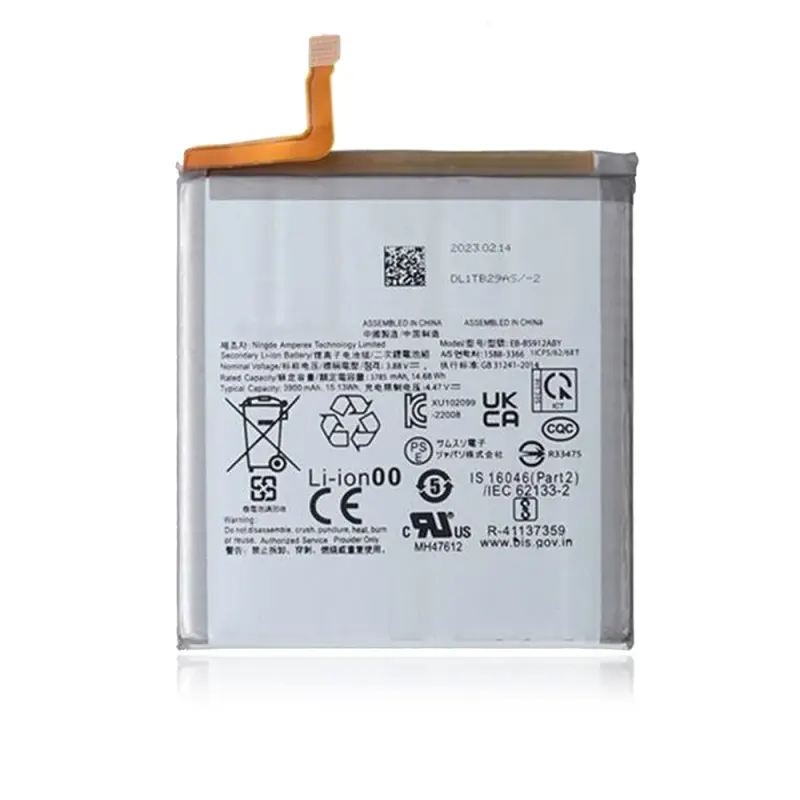
To work out a battery's Watt-hour rating, multiply its nominal voltage by its capacity in amp-hours. A 3.85 V battery rated 4,000 mAh (4.0 Ah) works out to 15.4 Wh, comfortably below the 100 Wh battery threshold.
The 30% state of charge rule for air freight
The IATA guidance states that lithium-ion batteries packed by themselves under PI 965 must be shipped at a state of charge (SoC) not exceeding 30% of their rated capacity. Shipping above 30% requires approval from both the State of Origin and the State of the Operator under Special Provision A331. Since 1 January 2026, a reduced SoC is also required for lithium-ion batteries packed with equipment (PI 966), including Section II batteries above 2.7 Wh.
Batteries at lower charge are less prone to thermal runaway. In practice, air-freighted batteries should arrive partly discharged; a batch arriving fully charged was not shipped as declared.
What documents do customs and forwarders ask for?
A UN38.3 test summary is a standardised document confirming that a lithium cell or battery model has passed the transport tests in sub-section 38.3 of the UN Manual of Tests and Criteria. The tests cover altitude, thermal cycling, vibration, shock, external short circuit, impact or crush, overcharge and forced discharge. Manufacturers and subsequent distributors must make the summary available, and IATA notes it can be supplied as a website link or QR code instead of paper.
A valid summary names the manufacturer and test laboratory, gives a unique report number and date, states the battery's mass, Watt-hour rating and model numbers, lists each test with its result, cites the UN Manual revision used, and names a responsible person. Missing fields make it unusable.
An SDS (Safety Data Sheet, formerly MSDS) describes the battery's chemistry, hazards, handling, fire-fighting and storage. Forwarders need it to book DG space.
For a typical battery consignment into Bangladesh, prepare:
- Commercial invoice and packing list listing each battery model, quantity and Watt-hour rating.
- UN38.3 test summary for every battery model in the shipment, not one summary for the whole order.
- SDS for each battery type.
- Dangerous goods transport documents as required by your forwarder for the section you ship under, plus the airway bill or bill of lading marked accordingly.
- HS classification: lithium-ion accumulators fall under HS 8507.60.00. For the full duty picture, see our phone parts HS codes and import duty guide.
Missing or mismatched battery documents are one of the common reasons covered in why Bangladesh import clearance gets delayed. Our customs clearance service checks the battery file before the goods leave Shenzhen, not after they land.
Sea or air freight for phone batteries?
Both are possible, and the choice depends on volume and urgency.
| Factor | Air freight (UN3480, PI 965) | Sea freight (consolidated or FCL) |
|---|
| Aircraft | Cargo aircraft only | Not applicable |
| Charge level | At or below 30% SoC | Ask your forwarder for current IMDG Code requirements |
| Carrier acceptance | Limited; DG-approved airlines and forwarders only | Wider, but the shipping line must accept DG cargo |
| Packaging | PI 965 Section IB tested packaging, Class 9 and CAO labels | Class 9 marking under the IMDG Code |
| Best for | Urgent top-ups, fast-moving iPhone SKUs | Large mixed Android orders, planned restocking |
Sea freight is governed by the IMO's IMDG Code rather than the IATA DGR, but the battery is still Class 9 and you still need the UN38.3 summary and SDS. Never hide batteries inside a general-cargo consolidation; undeclared lithium batteries risk seizure and penalties, not just delay.
Our import from China trade route consolidates battery cargo out of Shenzhen with forwarders who handle Class 9 every week.
Phone battery grades in the Shenzhen market
Like "Grade A" on displays, battery grade names are trade terms, not regulated standards. What matters is what the seller will put in writing for each SKU.
| Grade | What it means | Battery Health on iPhone | Best use |
|---|
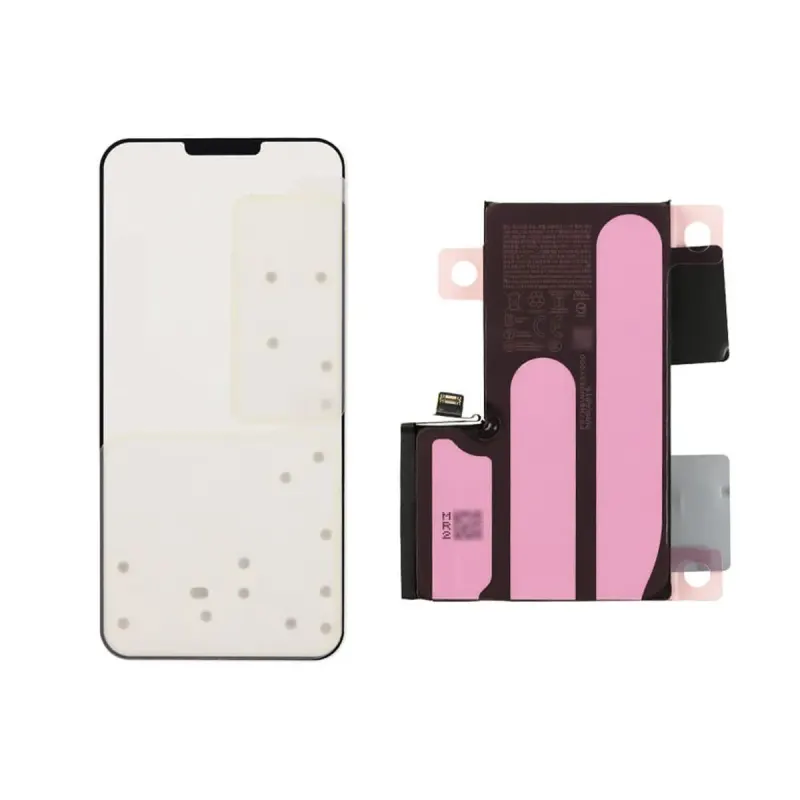
| Genuine service pack | Battery represented as Apple-made, sold for service | Can show Genuine once completed through Apple's Repair Assistant, where supported | Premium repairs, newer iPhones |
| Diagnostic / TI-solution | Aftermarket cell with a management board designed to report health data to iOS | Usually shows a health figure; Parts history may still show Unknown | Mainstream iPhone repairs where customers check Battery Health |
| Standard aftermarket | Aftermarket cell, no diagnostic support | Usually no health figure; message shown | Budget repairs, older models |
| High-capacity aftermarket | Aftermarket cell sold with a higher mAh rating than the original | Varies by board | Customers who want runtime; verify the claim |
| ORG (Android) | Trade term for original-specification replacement for Samsung, Pixel, Xiaomi and others | Not applicable | Android repair volume |
The iPhone side is complicated enough to need its own explainer. Our guide to iPhone battery health and diagnostic TI batteries covers the "Unknown Part" message, parts pairing and how to explain each grade to a customer.
How to check phone batteries on arrival
Inspect every batch before it joins existing stock:
- Swelling. Lay each battery flat on a piece of glass or a flat steel rule. Any rocking, bulging or soft spots means reject. Never install or store a swollen battery.
- Production date code. Check the date printed on the cell label. Prefer recent production, record date codes against the batch, and sell oldest stock first.
- Resting voltage. Measure a sample with a multimeter. A battery shipped at reduced charge should still hold a stable voltage; a cell that reads close to zero has been deeply discharged and should not be sold.
- Cycle count. Read the battery's data with a battery programmer or test box. A new battery should report zero or near-zero cycles. A high count means a used or refurbished cell sold as new.
- Capacity. Run a full charge-discharge test on a sample from each model and compare with the rated capacity.
- Documents match the goods. The model number and Watt-hour rating on the battery should match the UN38.3 summary in your file.
Keep incoming batteries at room temperature, away from metal objects and direct sun, and in their original insulated packaging until sale.
Where KHI fits in
K.H. Infinity (KHI) is a Bangladesh B2B importer of replacement phone batteries and repair parts sourced from Shenzhen (HS Code 8507.60.00), supplying repair shops and parts wholesalers with UN38.3 test summaries and MSDS provided per shipment and in-house NBR customs clearance. Our phone battery range covers iPhone 11 to iPhone 17 alongside Samsung, Google Pixel, Xiaomi, Redmi, POCO, OPPO, Realme, OnePlus, Huawei, Honor and Motorola models. Products carry CE and RoHS certification, and every SKU is labelled with its grade.
Ready to restock? Send us your model list and monthly volumes through the quote form, or browse the full phone battery catalogue. We confirm grade, documents and lead time per SKU.
Frequently Asked Questions
Can I bring phone batteries into Bangladesh by passenger flight?
Not as cargo. Under IATA rules, lithium-ion batteries shipped by themselves (UN3480) are forbidden as cargo on passenger aircraft and must travel on cargo aircraft with a Cargo Aircraft Only label. Commercial quantities in passenger luggage also leave you with no customs paper trail.
What is a UN38.3 test summary?
A UN38.3 test summary is a document confirming that a specific lithium battery model passed the transport safety tests in section 38.3 of the UN Manual of Tests and Criteria. It names the manufacturer, test laboratory, report number, battery model, Watt-hour rating and test results. You need one for every battery model you import.
Why do batteries need to be at 30% charge for air freight?
IATA requires lithium-ion batteries shipped alone under PI 965 to be at a state of charge not exceeding 30% of rated capacity, unless both the origin state and the operator's state approve otherwise. Batteries at lower charge are less prone to thermal runaway. Always confirm the current DGR edition with your forwarder.
Should I ship phone batteries by sea or air?
Sea suits larger, planned orders; air suits urgent or fast-moving SKUs. By sea, batteries remain Class 9 dangerous goods under the IMDG Code, so you still need correct declaration, UN38.3 summaries and an SDS.
What is the HS code for phone batteries in Bangladesh?
Lithium-ion replacement phone batteries are classified under HS 8507.60.00 (lithium-ion accumulators). Duty and taxes follow the current Bangladesh customs tariff, so confirm rates with your clearing agent before costing an order.
How do I tell if a "new" phone battery is actually used?
Read the cycle count with a battery programmer or test box; a new battery should show zero or near-zero cycles. Also check the date code, look for rework marks on the flex, and capacity-test a sample. A high cycle count or low capacity indicates a used or refurbished cell.