Bangladesh–India trade is one of the most politically charged yet commercially resilient corridors in South Asia. The Diplomat's October 2025 analysis captures the paradox precisely: anti-India sentiment surged after the 2024 political transition, yet India exported US$9.73 billion to Bangladesh in FY2025–26 (through February 2026) and bilateral trade for the full year hit US$13.51 billion. The trade does not care about the politics — because Bangladesh's garment sector, pharmaceutical supply chain, and motorcycle industry are structurally dependent on Indian supply. For FY2026–27 importers, the opportunity is in optimising the landed cost through SAFTA, choosing the right port, and riding the categories that are actually growing.
What Bangladesh Buys from India — and Why It Cannot Stop
- Cotton yarn and fabrics — the structural dependency. India supplies 82% of Bangladesh's total yarn imports — a US$1.85 billion category that grew 31.1% year-on-year in CY2024. Bangladesh's ready-made garment sector, which generates 84% of the country's export earnings, cannot substitute Indian yarn at scale. This is not a trend; it is a structural reality.
- Motorcycle and auto parts — a growing import opportunity. India exported US$93.22 million in auto and motorcycle parts to Bangladesh in 2024. India supplies 94% of Bangladesh's motorcycle and scooter imports. With Bangladesh's motorcycle fleet expanding rapidly in Dhaka, Chittagong, and secondary cities, demand for spare parts — oil tanks, chain sprockets, brake assemblies, engine filters — is rising faster than local availability.
- Pharmaceutical APIs and formulations. India exported US$128.89 million in pharmaceutical products to Bangladesh in 2025 (UN COMTRADE). Indian generic APIs are a critical input for Bangladesh's domestic drug manufacturing industry and cannot easily be sourced elsewhere at equivalent price-to-quality ratios.
- Petroleum products, FMCG, and construction materials. Refined petroleum remains India's largest single export line to Bangladesh by value. Lentils, onions, spices, and edible oils are highly seasonal and price-sensitive. Construction materials — steel, iron, cement clinker — track Bangladesh's infrastructure spending cycle.
Benapole vs. Bhomra: Which Port for Your Goods?
Bangladesh has two primary land ports for India trade. Choosing the right one affects clearance time, cost, and reliability:
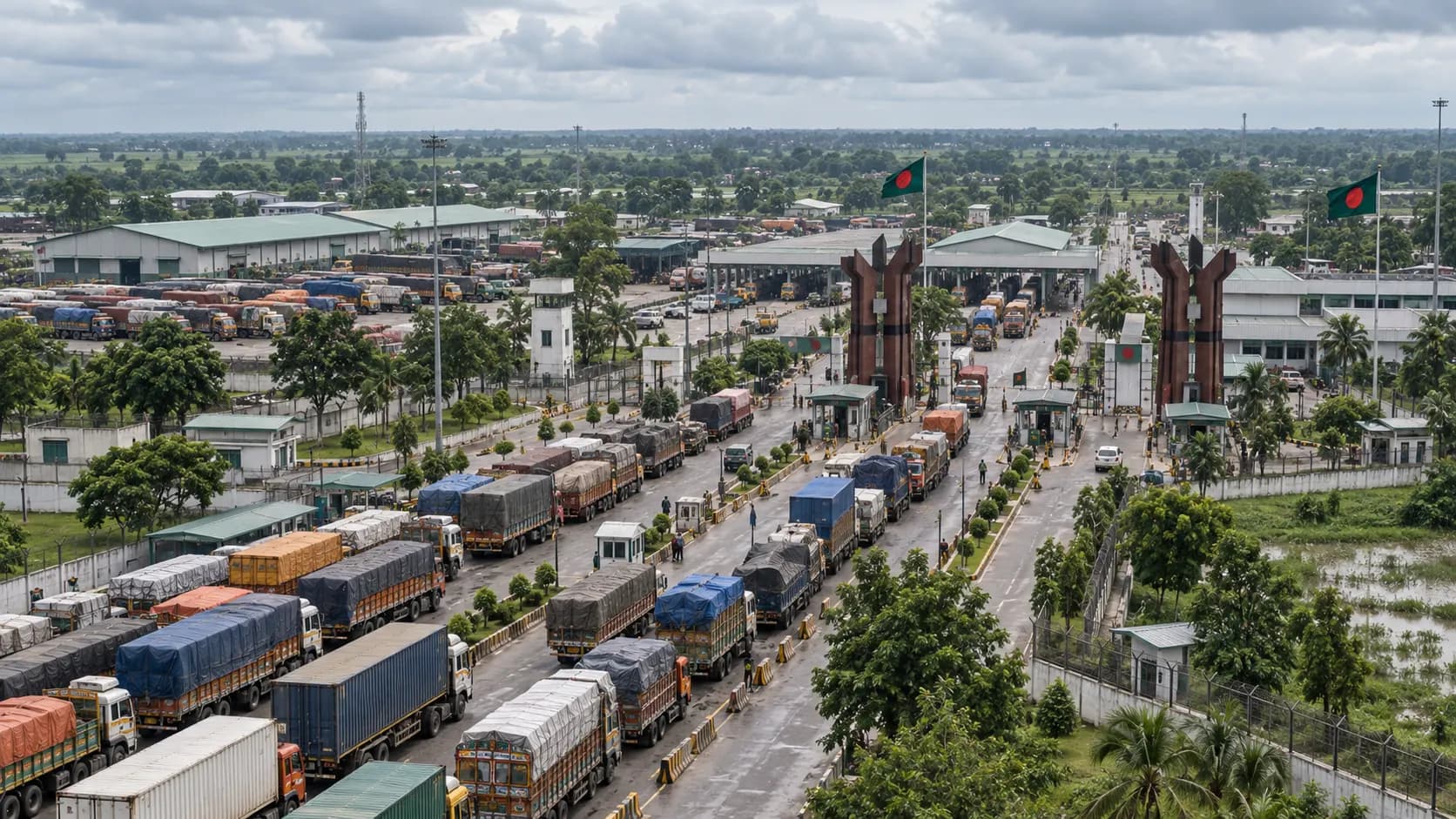
- Benapole-Petrapole ICP is the largest bilateral land crossing and handles roughly 30% of all land-based India–Bangladesh trade. Import volumes were 20.38 lakh tonnes in 2024, down slightly from 21.14 lakh tonnes in 2023. Average customs clearance time is 2–4 days due to infrastructure constraints and periodic congestion. Best for: FMCG, produce, consumer goods destined for Dhaka and the southwest corridor.
- Bhomra Land Port has grown steadily — FY25 throughput reached Tk3,406.95 crore with 10.23% YoY growth. Clearance times are generally faster for smaller consignments. Best for: construction materials, machinery parts, and cargo originating from West Bengal or Odisha industrial clusters.
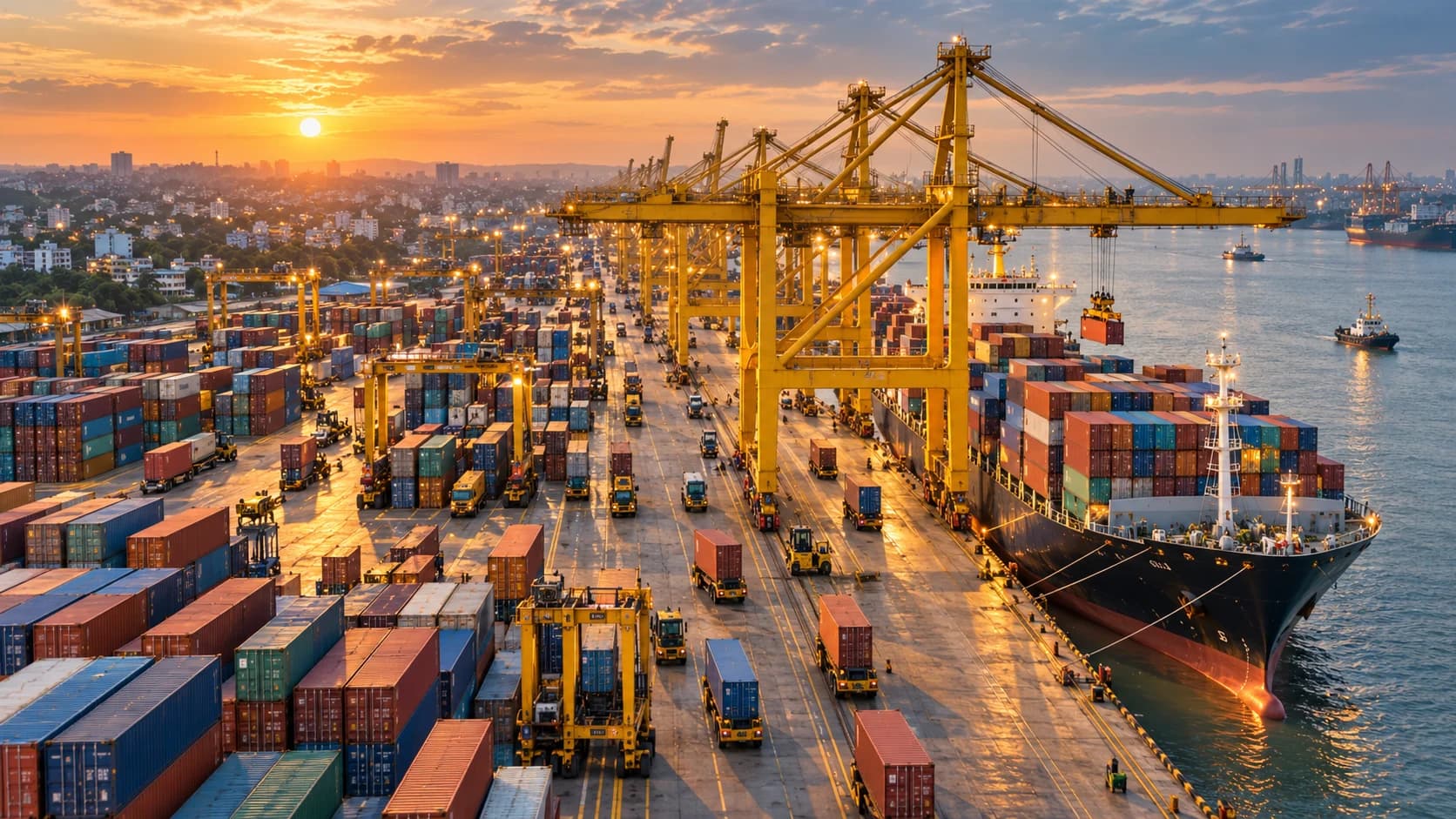
- Sea route via Kolkata port remains the best option for heavy goods (steel, capital machinery) where land port weight limits or congestion would add cost. Kolkata–Chittagong sea transit is typically 3–5 days.
Key risk in 2025–26: India's port restrictions barring Bangladeshi ready-made garments, processed food, plastic products, and wooden furniture from entering via land ports changed the truck-load economics for bilateral traders. Return trucks are harder to fill, raising the effective freight cost per tonne for importers using those same routes.
SAFTA Form A: The Preferential Duty Most Importers Never Claim
Under the South Asian Free Trade Area (SAFTA) agreement, qualifying goods imported from India attract preferential customs duty rates — typically significantly below the MFN rate. Yet a large proportion of Bangladeshi importers do not claim SAFTA benefits because of documentation gaps or unfamiliarity with the Form A process.
How to claim SAFTA preferential duty:
- Request a SAFTA Certificate of Origin (Form A) from your Indian supplier. The supplier obtains this from the Export Inspection Council or relevant issuing authority in India.
- The Form A must be original, signed, and match the invoice, packing list, and Bill of Lading exactly. Any discrepancy will cause it to be rejected at Benapole or Bhomra customs.
- Check India's Sensitive List — approximately 25 product categories are excluded from SAFTA duty-free treatment. Your HS code must not appear on the Sensitive List for the preferential rate to apply.
- Declare the SAFTA origin preference on your Bill of Entry at Bangladesh customs. Your customs agent must know which preference code to use.
KHI's customs clearance team regularly handles SAFTA Form A verification and can flag errors before your consignment reaches the border — avoiding rejected claims and re-assessment delays.
Seasonal Import Calendar for FY2026–27
India–Bangladesh trade is heavily seasonal for food commodities. Planning purchases around these windows avoids price spikes and availability gaps:
- October – January: Onion and produce imports surge as Bangladesh's domestic post-monsoon supply gap opens. Indian harvest timing drives Benapole volumes sharply upward.
- February – April: Cotton yarn imports peak ahead of the pre-Eid garment production rush. Book Indian yarn suppliers and LC capacity early — spot rates tighten in March.
- November – February: Petroleum and LPG demand rises with winter industrial and heating cycles.
- October – March: Construction materials track the dry-season construction window. Plan steel and cement clinker orders for October arrival to take advantage of project mobilisation demand.
Key Risks to Watch in FY2026–27
- India's food export bans. India has periodically restricted exports of wheat, sugar, and rice since 2022 to manage domestic inflation. These bans create sudden supply gaps for Bangladeshi food importers. Maintaining alternative origin options (Ukraine/Argentina for wheat, Brazil/Thailand for sugar) is now a risk management necessity, not a luxury.
- Anti-dumping duties on Bangladeshi jute. In September 2026, India imposed fresh anti-dumping duties of US$59–US$445 per tonne on jute yarn and twine, US$88 on hessian, and US$283 on sacking bags. This signal of political friction is worth monitoring — if retaliatory measures follow, land port clearance dynamics could tighten further.
- Perishable loss risk at Benapole. Average 2–4 day clearance times mean perishable imports — onions, fresh produce — carry meaningful spoilage risk during peak congestion periods. Insurance coverage and cold-chain handoff arrangements at the border should be confirmed before shipment.
Motorcycle and Auto Parts: The Fastest-Growing Import Opportunity
India supplies 94% of Bangladesh's motorcycle and scooter imports, and the spare parts market is growing in proportion. With motorcycle registrations rising in Dhaka, Chittagong, Sylhet, and secondary cities, demand for consumable parts — oil tanks, chain and sprocket sets, brake pads, engine filters — is outpacing local distributor inventory.
For importers entering this category:
- Verify BIS or ISI certification for safety-critical parts (brake components, fuel tanks). Indian-certified parts carry significantly lower BSTI scrutiny at Bangladesh customs.
- Confirm OEM fitment documentation with your Indian supplier — part numbers, compatible models, and year ranges. Mismatched parts are the leading cause of returns in this category.
- HS Chapter 87.14 covers most motorcycle parts. Verify the TTI for your specific sub-heading against the current Bangladesh Customs Tariff — rates vary between original equipment parts and aftermarket.
- K.H. Infinity is expanding into consolidated motorcycle parts imports from India. Contact us if you are a Dhaka or Chittagong distributor looking for a cleared, door-delivered supply.
Start Your India Import the Right Way
K.H. Infinity handles in-house NBR customs clearance, SAFTA Form A verification, and consolidated LCL imports from India for Bangladesh B2B buyers. Our team knows Benapole and Bhomra clearance timelines, knows which categories India restricts on short notice, and provides Total Tax Incidence (TTI) transparency upfront — so your cost model is accurate before your goods move.
Request an India import quote or speak to our customs and trade support desk.
Key Sources